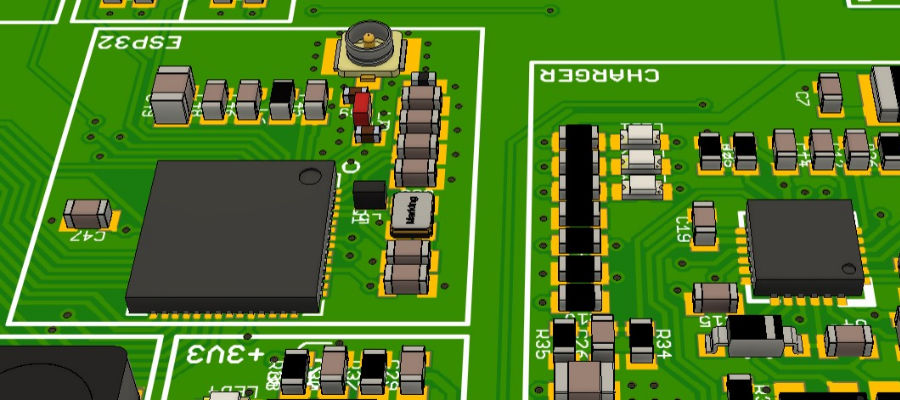
Portable LiFePO4-Powered Analog Monitor with LCD Output

This article describes work around a portable embedded measurement device, focusing on analog signal acquisition, battery-powered operation, and local display.

The system is powered by a rechargeable LiFePO4 cell, with integrated charging and protection circuitry to handle safe operation, monitoring, and undervoltage conditions.

An ESP32-S3 microcontroller is used to read an analog sensor through its ADC, apply basic processing (scaling/filtering), and update an LCD display with real-time values. Battery voltage is also monitored to report operating state and prevent unreliable readings at low charge.

Overall, the design combines portable power management, analog sensing, and a simple local interface in a compact standalone device.
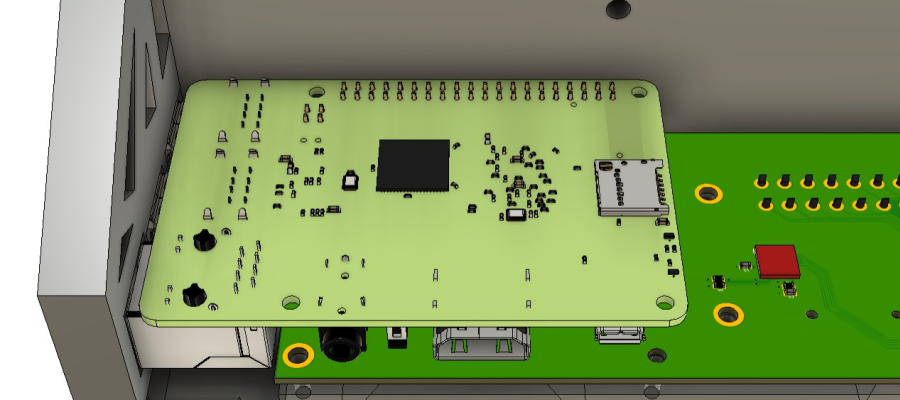
Connexion Test Bench

This article describes work around an automated cable harness test bench, focused on scalable I/O acquisition, real-time detection, and operator-facing display.

The system is built on a Raspberry Pi 4, used to run the user interface and manage test execution. A local HMI guides the operator, displays connection status, and reports pass/fail results during testing.

A large number of lines are monitored using I/O expanders, allowing many connections to be checked in parallel. Test logic identifies common wiring issues such as opens, shorts, swapped lines, or inverted connections, with results updated on-screen in real time.

Overall, the design centers on reliable multi-channel continuity checking with clear visual feedback and a workflow-oriented interface.

Multiplexed Resistivity Measurement System

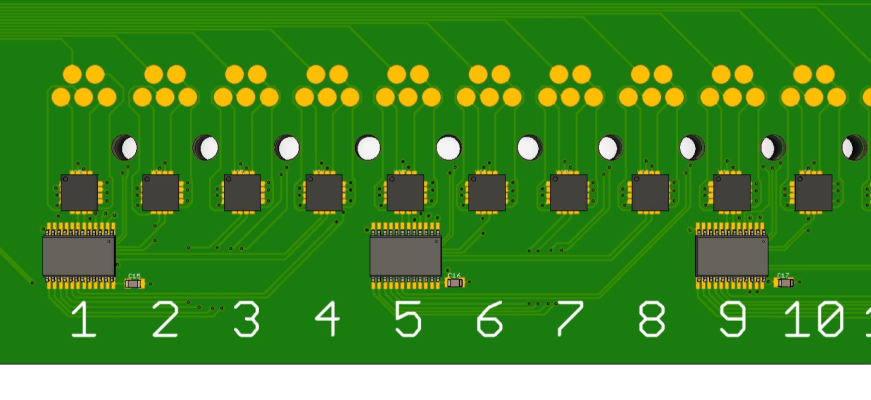
This article describes work around a multiplexed resistivity measurement device, focused on multi-channel acquisition, removable contacts, and USB interfacing.

The design is based on an STM32F030 microcontroller, used to sequence measurements across multiple electrode points, handle basic signal processing, and communicate with a host over USB.

Channel selection is done through I/O expanders and multiplexing, allowing many electrodes to be scanned without manual rewiring. Connections are made using pogo pins to provide repeatable contact while keeping the setup removable and fast to install.

The device uses USB-C for both power and data transfer, supporting a compact and portable form factor.

Overall, the work centers on combining multiplexed routing, reliable contact mechanics, and embedded control to automate multi-point resistivity measurements.

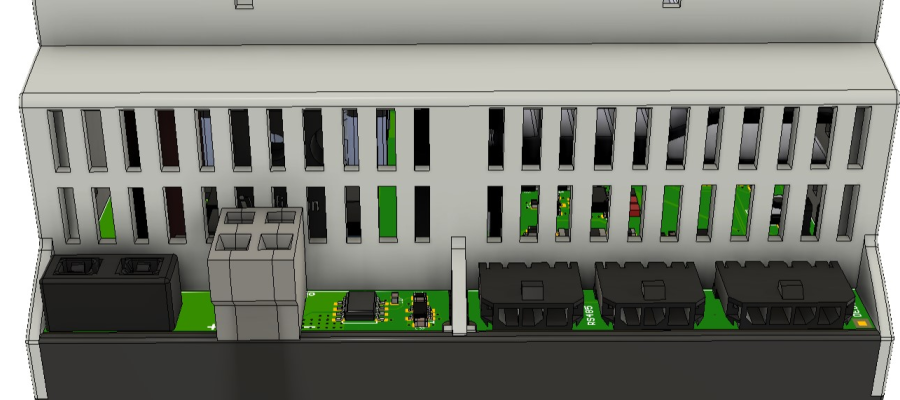
Power Converter with RS485 Telemetry

This article describes an embedded controller for a few-hundred-watt DC power conversion stage, focused on real-time measurement, MPPT control logic, and protection handling.

The design is based on an STM32F334 (timers/ADC well-suited for power control). The firmware acquires bus voltage and current via synchronized ADC sampling, applies basic filtering, and computes instantaneous power for regulation and monitoring.

A closed-loop control implements MPPT by adjusting the converter operating point through PWM duty cycle updates. The power stage includes a boost converter sized for ~48 V class operation, with control features such as soft-start, duty limiting, and fault-driven shutdown.

For protection, an independent path can engage a dump load to clamp bus overvoltage and absorb excess energy when required. Fault handling covers typical events such as overvoltage/overcurrent and temperature-dependent derating (depending on available sensing).

Telemetry and external control are provided through RS485 (Modbus), exposing measurements, state, and fault codes for supervision.

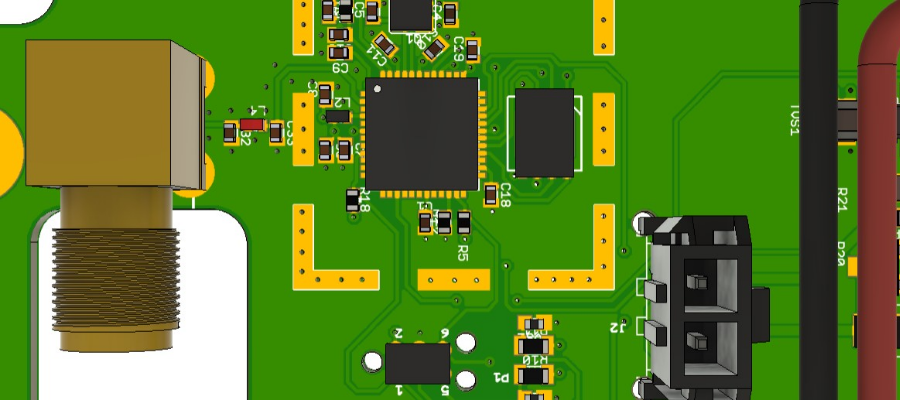
Wi-Fi Router with AC and Battery Power

This article describes work around a compact networking device built on an ESP32 (ESP32-D0WDQ6-V3), focused on Wi-Fi connectivity, packet routing, and power management.

The firmware configures the ESP32 to operate with multiple Wi-Fi roles (e.g., uplink + local access), handling link monitoring, reconnection logic, and basic system supervision (watchdog, status reporting).

Power design supports mains operation (230 VAC) through an AC-DC stage, with an integrated Li-Ion backup battery for continuity during interruptions. A battery management section handles safe charging, protection, and voltage monitoring to prevent undervoltage operation and ensure predictable behavior when switching between power sources.

Overall, the work combines Wi-Fi routing, reliability-focused firmware, and dual-source power management in a small standalone platform.