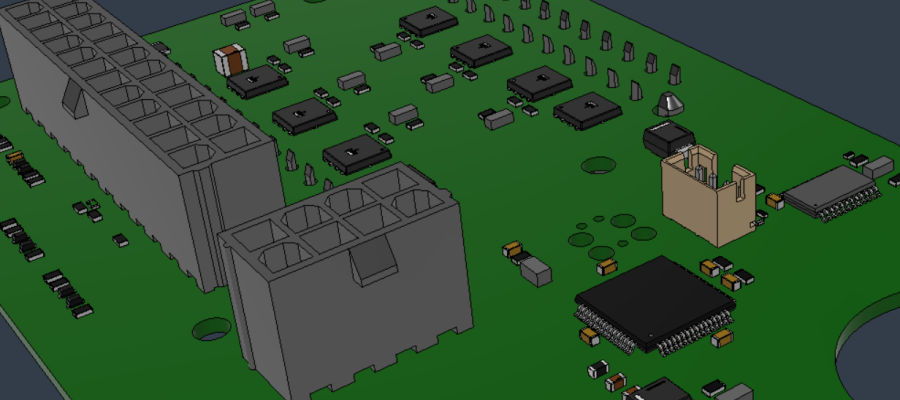
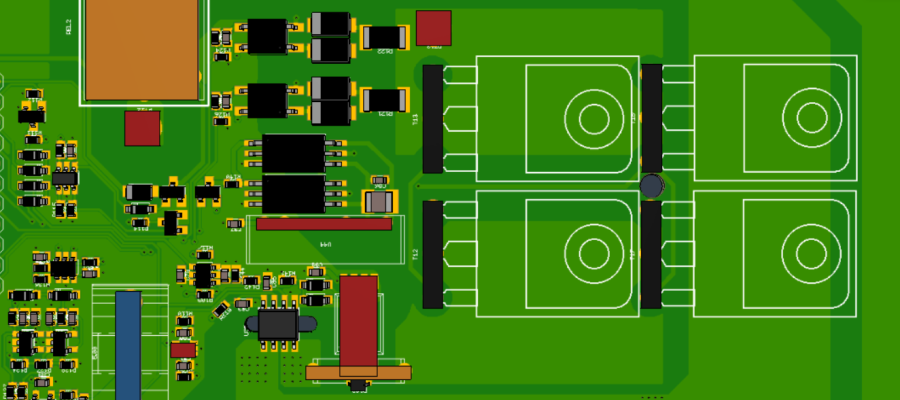
Replacing mechanical relays with MOSFET-based SSRs is always appealing. No moving parts, no contact wear, silent switching. But a custom SSR power distribution board is a lot more than a simple switching circuit.
Each channel has a MOSFET running in full conduction. The dominant loss is conduction loss: P = I² × Rds(on). That makes Rds(on) a critical parameter, directly tied to thermal performance. The target was to keep junction temperature rise under +50°C above ambient with passive cooling only — which meant careful heatsink selection, thermal interface material, and mounting quality.
Current sensing is done with Hall-effect sensors: no resistive losses in the power path, natural galvanic isolation. The ATSAMD20 uses those readings for overcurrent protection and RS485 telemetry. One of those projects where every design choice genuinely affects every other one.