
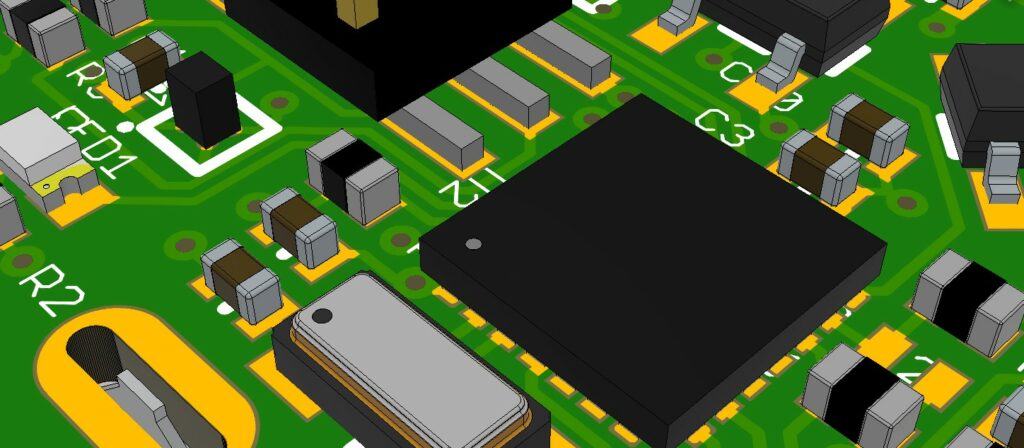
The starting constraint was easy to state and hard to meet: a standalone temperature logger, smaller than a one-euro coin, with the longest possible battery life, and contactless data retrieval.
The form factor forces brutal decisions from the start. No room for a large cell, no room for a conventional radio module, no room to afford ordinary standby consumption. Every microamp has to be justified.
The STM32L031G6U3TR was the obvious pick. It’s one of the most compact STM32 microcontrollers available — UFQ package, 3×3 mm — and it comes with the low-power modes needed to survive in very tight energy budgets. In stop mode with the RTC running, consumption drops to a few hundred nanoamps. On a small cell, that translates to months of autonomous operation.
Temperature measurement is handled by an external sensor selected for its footprint and current draw. The micro wakes up on a timer, takes a measurement, timestamps it, writes it to storage, and goes back to sleep. As simple as possible on the logic side, as frugal as possible on the energy side.
For data retrieval: NFC Mailbox. No permanent radio, no Bluetooth, no antenna burning current in standby. Bring a smartphone close, the NFC field partially powers the circuit, and the logged data is read directly from memory. Clean, instant, no dedicated battery needed on the reader side.
This project is a good example of what “design under constraint” actually means in practice: every single decision is a negotiation between size, power, and functionality.