[018] AUTOMATIC MULTI-SOURCE AC TRANSFER

When the load can’t tolerate an interruption, switching between AC sources becomes a core function — not a nice-to-have.

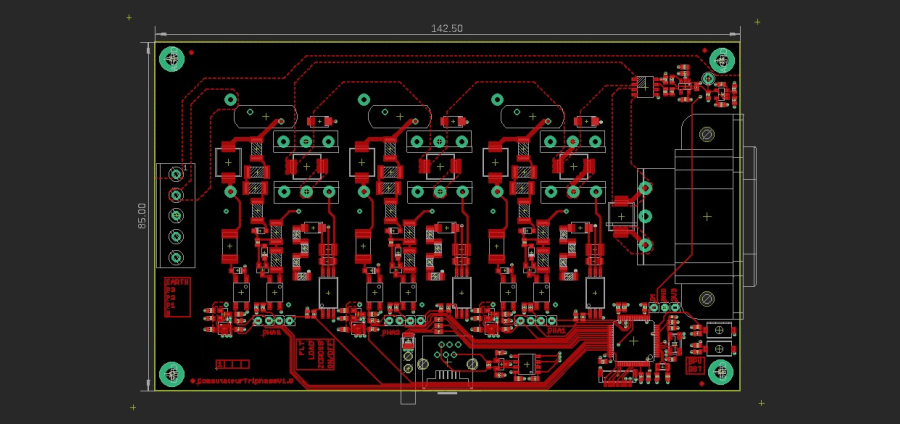
This system monitors three-phase inputs and automatically transfers the output to a secondary source when a failure is detected on the active one. SSRs were chosen for their silent, wear-free operation and precise electronic control over the switching process.

But using SSRs on AC isn’t just swapping a relay for a semiconductor. Voltage rating, thermal dissipation, leakage current, and switching behavior under load all need to be addressed. The STM32L152RET6 handles source and load detection, determines when to switch, enforces the right transfer sequence, and prevents any unsafe overlap between sources.
[017] MICROTURBINE LOAD REGULATOR

A microturbine doesn’t stop generating because the network doesn’t need its power anymore. You need somewhere to send the excess energy — that’s the job of the dump load regulator.

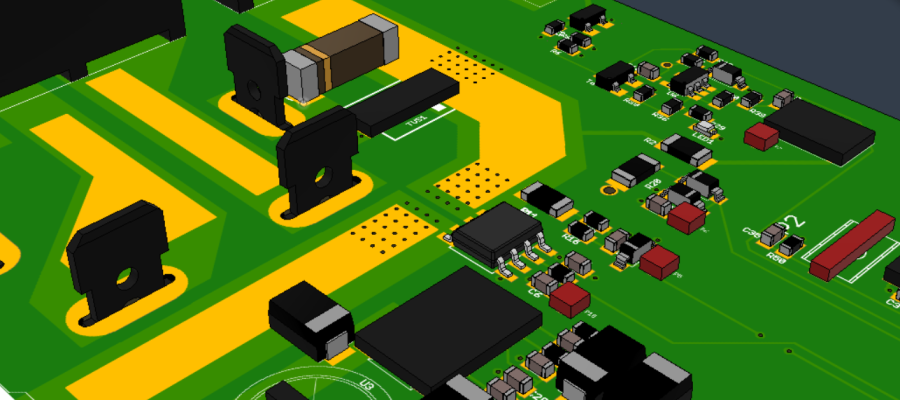
This buck-based regulator at 12 V / 300 W actively manages energy transfer into the dump load rather than relying on simple passive dissipation. At 300 W, component selection, copper sizing, switching behavior, and thermal paths are all serious topics that need real attention.

The STM32L152RET6 handles regulation logic, measurements, and system supervision. Modbus/RS485 telemetry exposes operating values and status for integration into a wider supervision system. A project where power electronics and embedded control genuinely have to work as one.

[013] EMBEDDED 4G TRACKING DEVICE

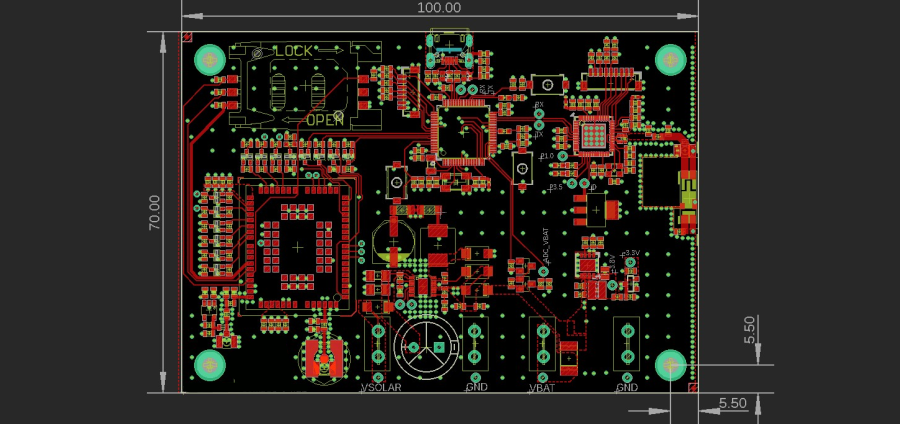
GPS, 9-axis IMU, 4G modem with 2G fallback, BLE, Li-Ion battery — all on one compact platform built around an STM32L152.

4G is the primary communication path, with 2G taking over if coverage degrades. BLE provides a local interaction layer through a smartphone — configuration and status access without going through the cellular network. The IMU adds motion awareness on top of positioning: not just where the device is, but how it’s moving.

In a product like this, energy management is its own engineering challenge. The cellular modem, GNSS receiver, and IMU all have very different power profiles, and the whole thing has to run on battery in unpredictable field conditions. A real system architecture problem from start to finish.

[012] CUSTOM 868 MHz TO CELLULAR GATEWAY

Connecting remote radio nodes to a distant server, with no wired infrastructure — that’s what this gateway is built for.

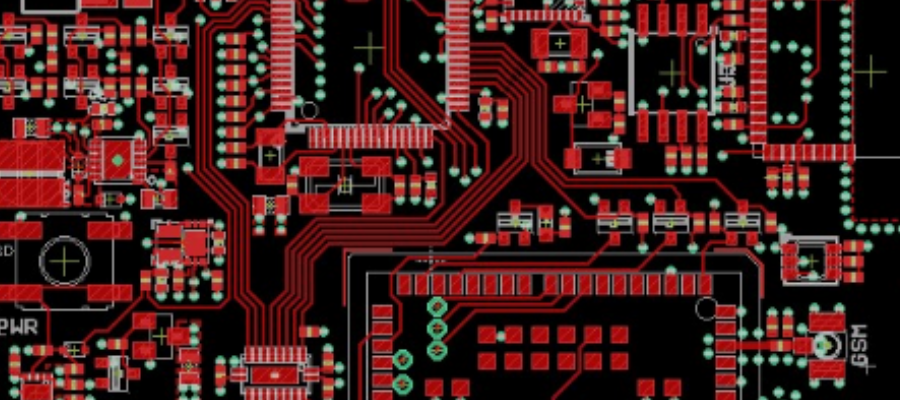
On one side, a 868 MHz radio interface handles links with multiple remote nodes. On the other, a cellular modem (4G primary, 2G fallback) forwards the data to the outside world. The STM32L152 supervises communication, power management, and overall system behavior.

Power comes from a battery combined with a solar panel, which means energy management is directly tied to communication strategy. In standby, you conserve. When it’s time to transmit, you spend. Finding the right balance between those two modes in real field conditions — that’s where the design actually gets interesting.