
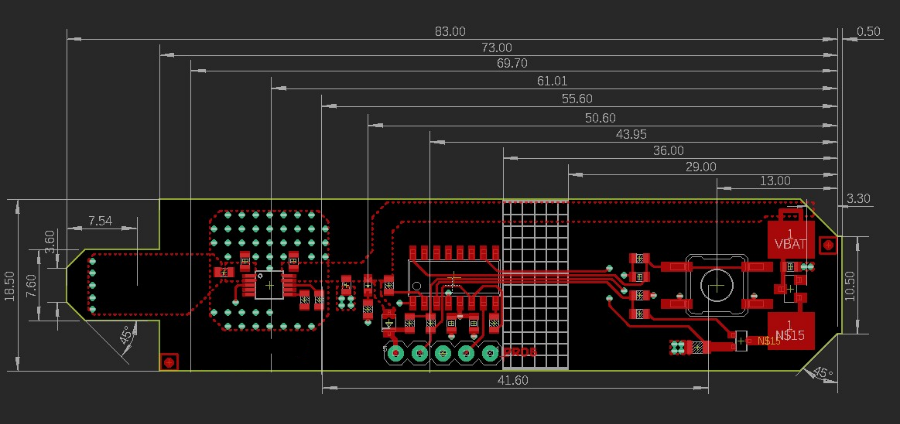
[014] PORTABLE BATTERY-POWERED DEVICE WITH DC MOTOR

A portable device with a rechargeable Li-Ion battery, a DC motor, physical buttons for local control, and Bluetooth for wireless interaction. All coordinated by an EFM8BB10F8G, a compact microcontroller that handles both energy management and motion control.

The motor brings its usual set of challenges: startup current, electrical noise, switching behavior. The battery has to sustain current peaks while remaining stable for the rest of the electronics. Bluetooth adds flexibility — the user can operate the device wirelessly without being limited to the physical interface.

The main challenge here is making all of it coexist in a compact enclosure without each block disturbing the others. A solid system integration exercise in a small package.
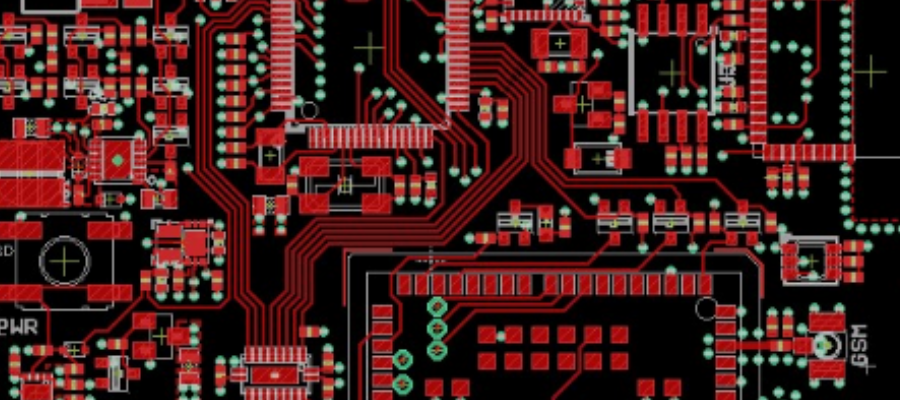
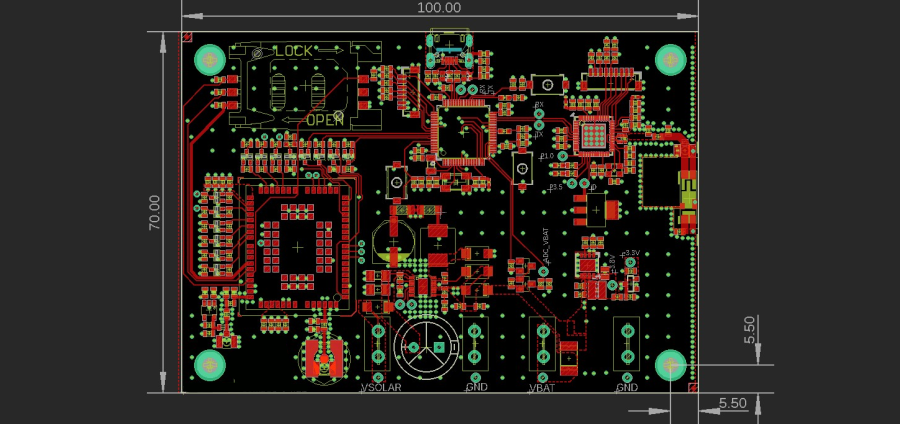
[013] EMBEDDED 4G TRACKING DEVICE

GPS, 9-axis IMU, 4G modem with 2G fallback, BLE, Li-Ion battery — all on one compact platform built around an STM32L152.

4G is the primary communication path, with 2G taking over if coverage degrades. BLE provides a local interaction layer through a smartphone — configuration and status access without going through the cellular network. The IMU adds motion awareness on top of positioning: not just where the device is, but how it’s moving.

In a product like this, energy management is its own engineering challenge. The cellular modem, GNSS receiver, and IMU all have very different power profiles, and the whole thing has to run on battery in unpredictable field conditions. A real system architecture problem from start to finish.

[012] CUSTOM 868 MHz TO CELLULAR GATEWAY

Connecting remote radio nodes to a distant server, with no wired infrastructure — that’s what this gateway is built for.

On one side, a 868 MHz radio interface handles links with multiple remote nodes. On the other, a cellular modem (4G primary, 2G fallback) forwards the data to the outside world. The STM32L152 supervises communication, power management, and overall system behavior.

Power comes from a battery combined with a solar panel, which means energy management is directly tied to communication strategy. In standby, you conserve. When it’s time to transmit, you spend. Finding the right balance between those two modes in real field conditions — that’s where the design actually gets interesting.