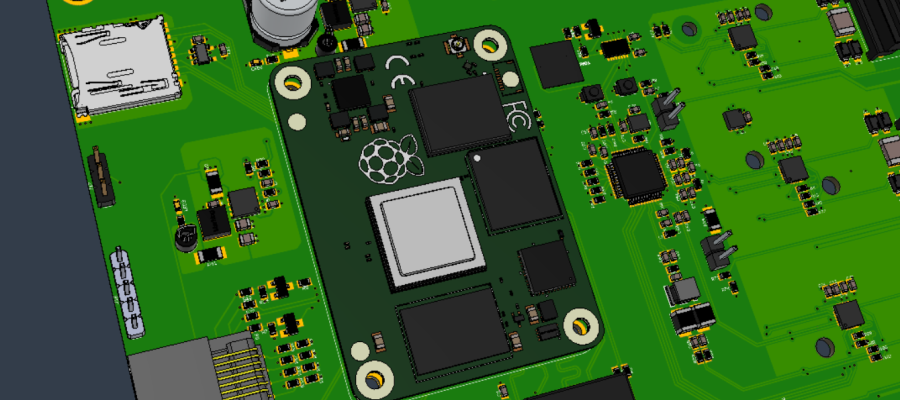
[024] INDUSTRIAL ETHERNET / PLC GATEWAY

Industrial systems rarely live in a single communication world. This project addressed a real need: getting modern Ethernet-based equipment to coexist with legacy infrastructure using Power Line Communication.

The core is a Raspberry Pi Compute Module, handling protocol translation, data routing, and system supervision. Ethernet on one side, PLC on the other — the gateway bridges two environments with very different behaviors in terms of timing, noise, protocol structure, and deployment constraints.

What makes this kind of device interesting is that the value isn’t just in the hardware. The software architecture — buffering, message validation, fault handling, watchdog strategy — matters just as much as the electronics. And in an industrial field context, long-term stability is just as important as the feature set.
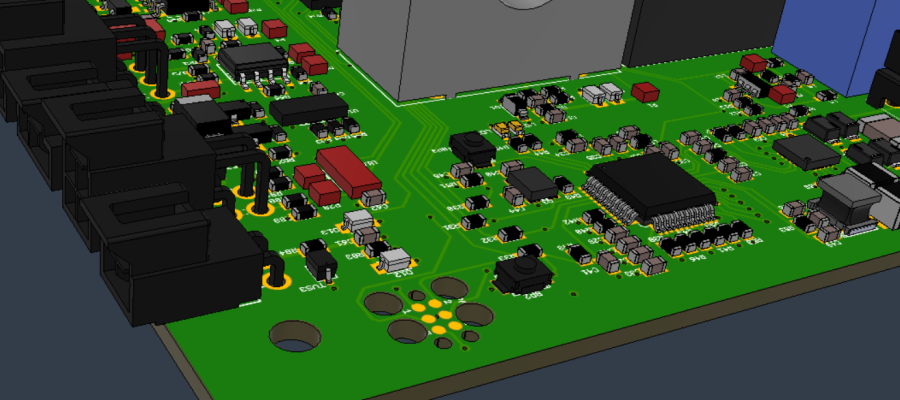
[023] WATER LEAK CONTROL DEVICE WITH PLC TELEMETRY

A water leak control device isn’t just about triggering an alarm. This project combines detection, local actuation, status signaling, and data reporting — all over the existing power line network, no dedicated communication wiring needed.

The PIC24FJ256GL406 coordinates everything: reading sensors, making local decisions, driving motors (valve or mechanical shutoff), and controlling status LEDs. PLC telemetry lets monitoring and control data travel over infrastructure that’s already in place, which simplifies installation and keeps deployment costs down.

What stands out in this project is the integration of several functions into one compact embedded unit: detection, decision, actuation, and reporting. Each block directly influences the others, which is what makes designing it interesting.

[022] ROBOT MAINBOARD

A robot mainboard is where power, motion, intelligence, and system reliability all meet. You can’t treat each block in isolation — they’re all connected, and the design has to reflect that.

LiFePO4 was chosen for its thermal stability, long cycle life, and safety profile. Battery management has to hold up during motor startup and current peaks without destabilizing the rest of the system.

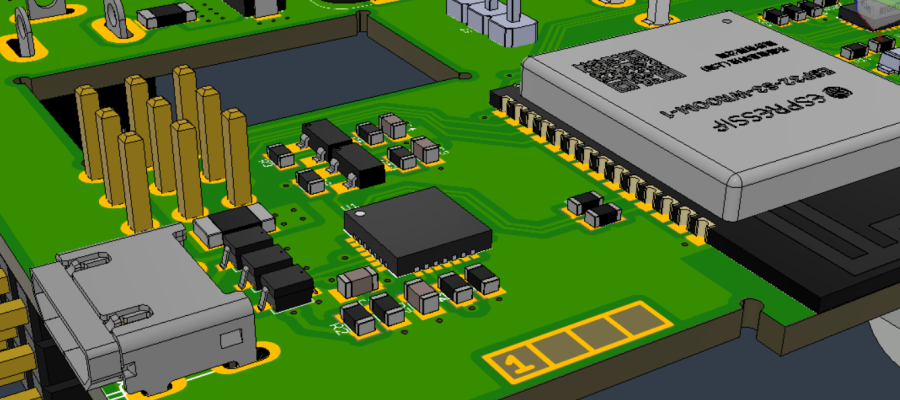
The ESP32-S3-WROOM-1-N16R8 handles control, Wi-Fi, and system supervision. H-bridge drivers run the DC motors in both directions. Beyond the schematic, what makes the board solid is the partitioning between power electronics, control logic, and sensitive digital domains: motor current paths, decoupling, grounding strategy, thermal dissipation. On a board like this, everything is connected to everything else.

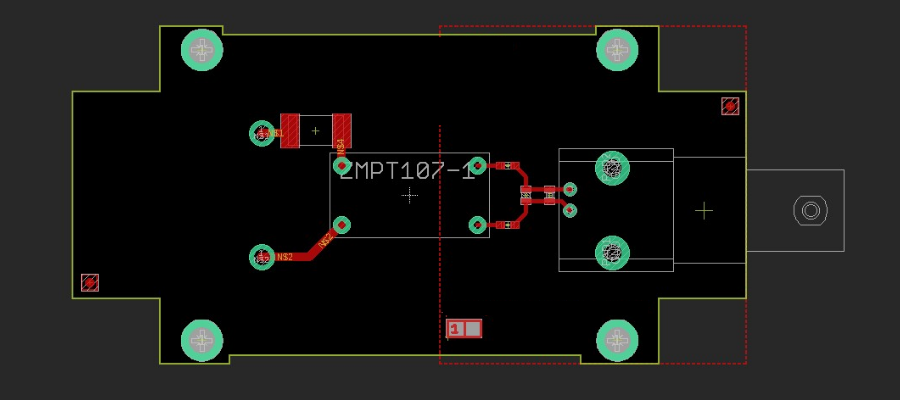
[021] ISOLATED MAINS VOLTAGE PROBE FOR OSCILLOSCOPE

Measuring 230 VAC directly on a scope, without the right interface, is either dangerous or useless. That’s what this probe is for.

It provides full galvanic isolation between the measurement side and the oscilloscope input — which is usually earth-referenced. It preserves enough signal fidelity for meaningful waveform analysis while staying robust enough for repeated bench use.

Everything is packaged inside a dedicated enclosure, making it a real lab instrument rather than a bare circuit on a desk. It’s the kind of tool you build once and use on every project involving mains: switching power supplies, protection circuits, sensing stages, anything that has to survive and behave correctly at 230 VAC. Worth every hour spent building it.

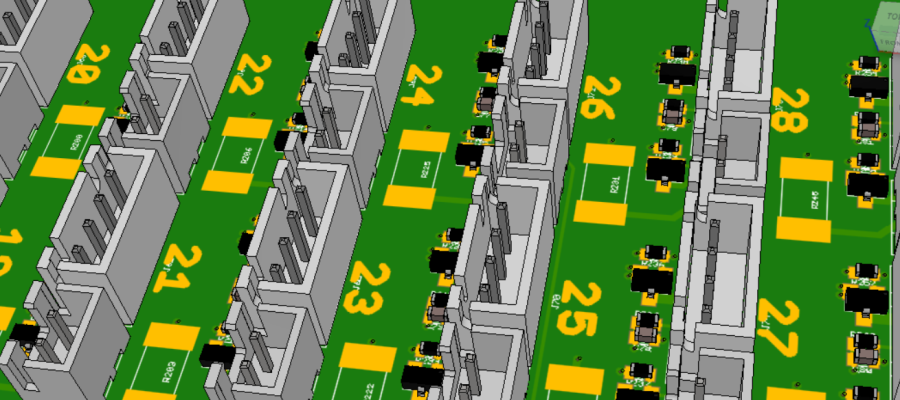
[020] CONTROL BOARD FOR ELECTRONIC LOCKS

Driving electronic locks and LEDs at 24 V with Modbus Ethernet telemetry — the project looks straightforward until the channel count starts climbing.

Multiplexing is at the heart of the architecture. Rather than dedicating a full hardware path to every signal, the design optimizes resources with careful sequencing logic. The ATSAMD20J16B-MN orchestrates everything: output state management, multiplexing timing, control firmware, and network telemetry.

Modbus Ethernet turns the board into a networked node: it can receive commands and report its status within an existing IP-based control infrastructure. On the hardware side, separating 24 V power outputs, control logic, and the communication layer required real layout and grounding discipline.